FAQs
Home to any and all orthotic questions.
Most Popular
Which orthotic should I choose for my arch type and shoe style?
You should match the model to your arch height and shoe type, using Natural Foot Orthotics’ on-site selection guidance
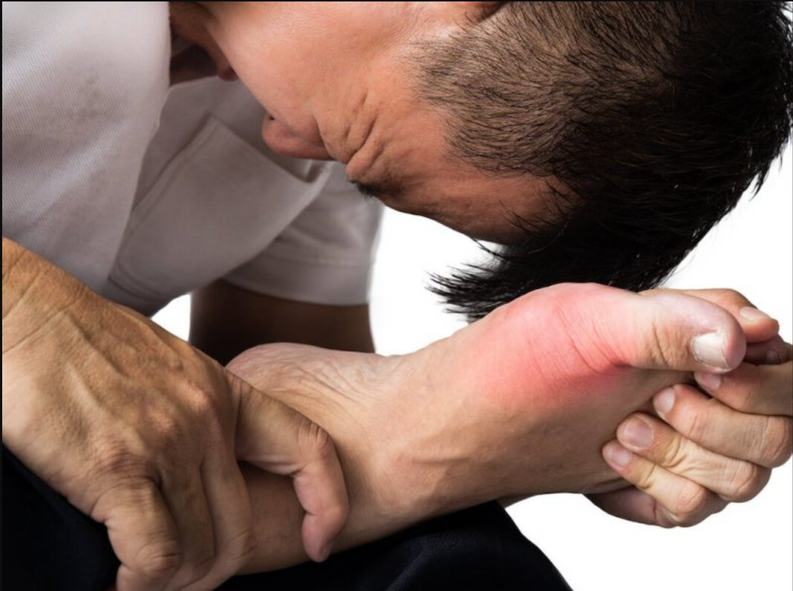
What is plantar fasciitis, and why does my heel hurt most in the morning?
You can think of plantar fasciitis as irritation of the plantar fascia on the bottom of your foot, and you often feel it worst with your first steps after rest because the tissue tightens while you’re off your feet.
Do shoe inserts help plantar fasciitis?
You can use inserts/orthotics as part of conservative care because they may reduce strain on the plantar fascia, but you should combine them with stretching and footwear changes and see a clinician if pain persists.
What does the lifetime warranty cover and how do I activate it?
You should register your purchase here to activate the warranty, and the lifetime warranty language primarily addresses breakage/cracking (with exclusions for normal wear and a defined claim process).
Do you accept FSA/HSA payments?
You can pay with eligible FSA/HSA methods (or use receipts for reimbursement when applicable) following the brand’s guidance for checkout and documentation.
Product Selection
What product lines does Natural Foot Orthotics sell?
You can choose from multiple core orthotic lines on the site (including Stabilizer models like Original/Intermediate/Slim, plus Cloud models (Cloud RX & Cloud Comfort), Fashion options for dress shoes/heels, and Orthotic Cushions)
Which orthotic should I choose for my arch type and shoe style?
You should select the model that matches your arch height and the shoe you’ll wear most (for example, a different option may be positioned for dress shoes/heels versus everyday shoes). Find your arch type and foot size here.
What’s the difference between Original, Intermediate, and Slim Stabilizers?
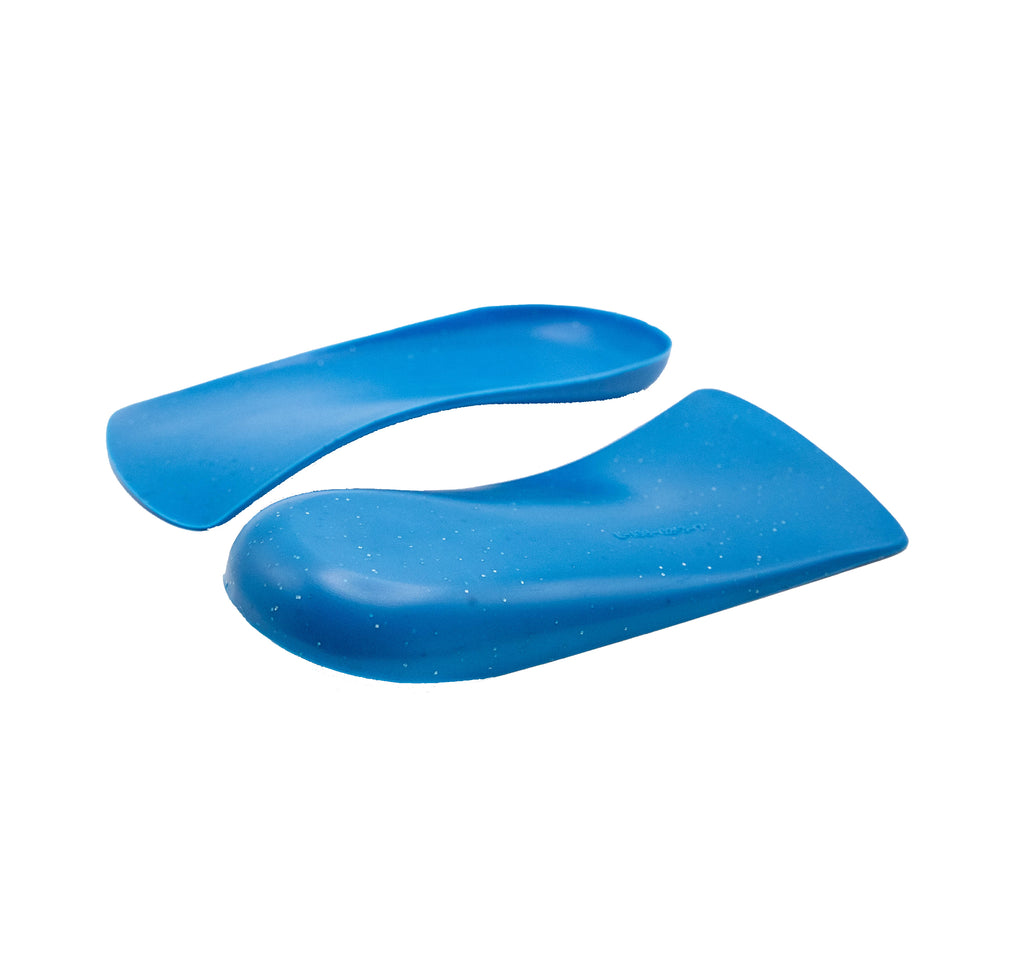
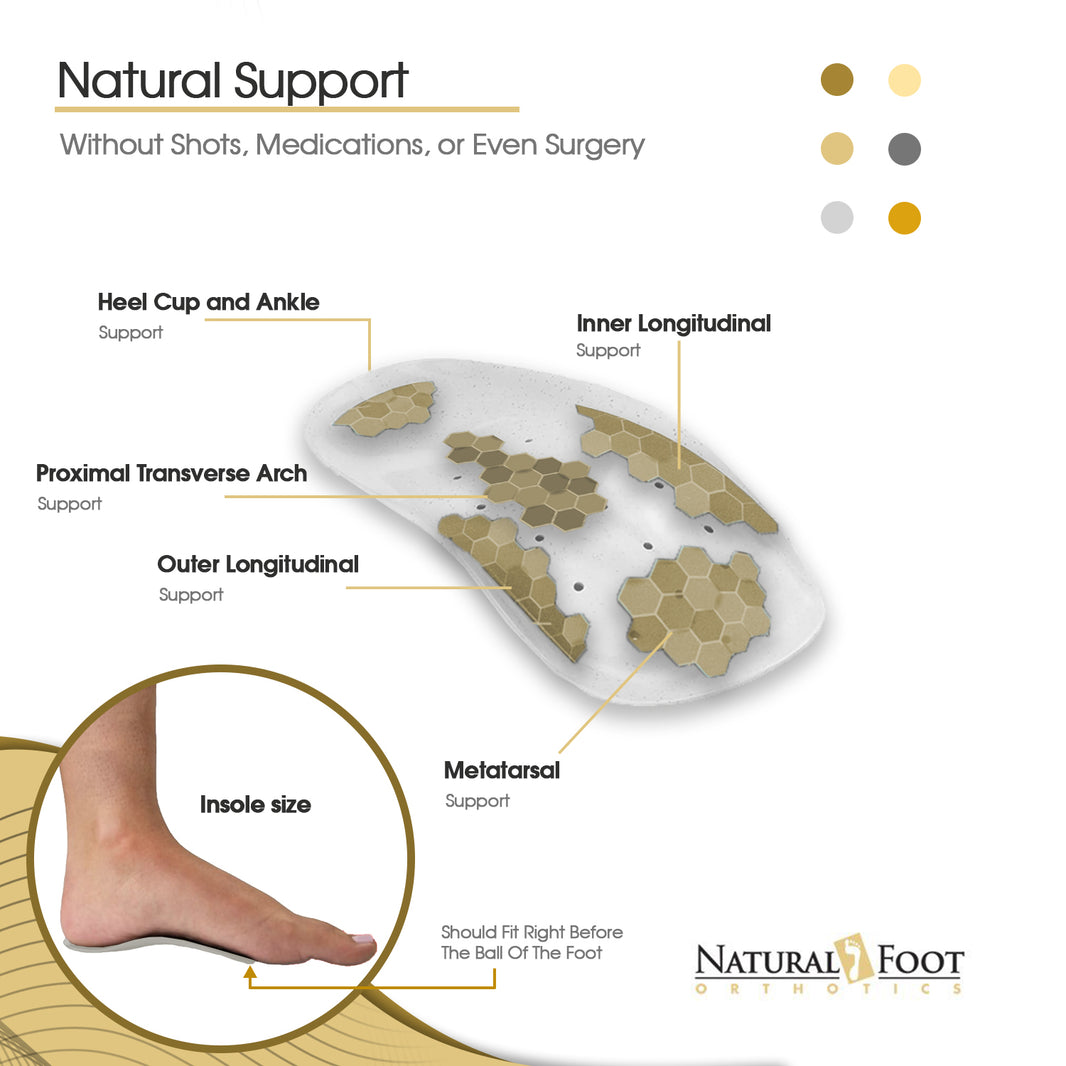
Original is generally described as the most aggressive support for high arches, Intermediate for medium height arches, and Slim for low to flat arches. They all support all 4 arches of the foot making them equally effective.Order to your arch height.
What are the differences between Cloud RX & Cloud Comfort?
Cloud Comfort-– Our most gentle yet supportive orthotic, designed for sensitive feet. Provides soft stability that helps relax your feet while still delivering dependable arch support for medium to low arches. Little-to-No Break-In Comfort Perfect for slippers, after-work shoes, boots, and everyday footwear.
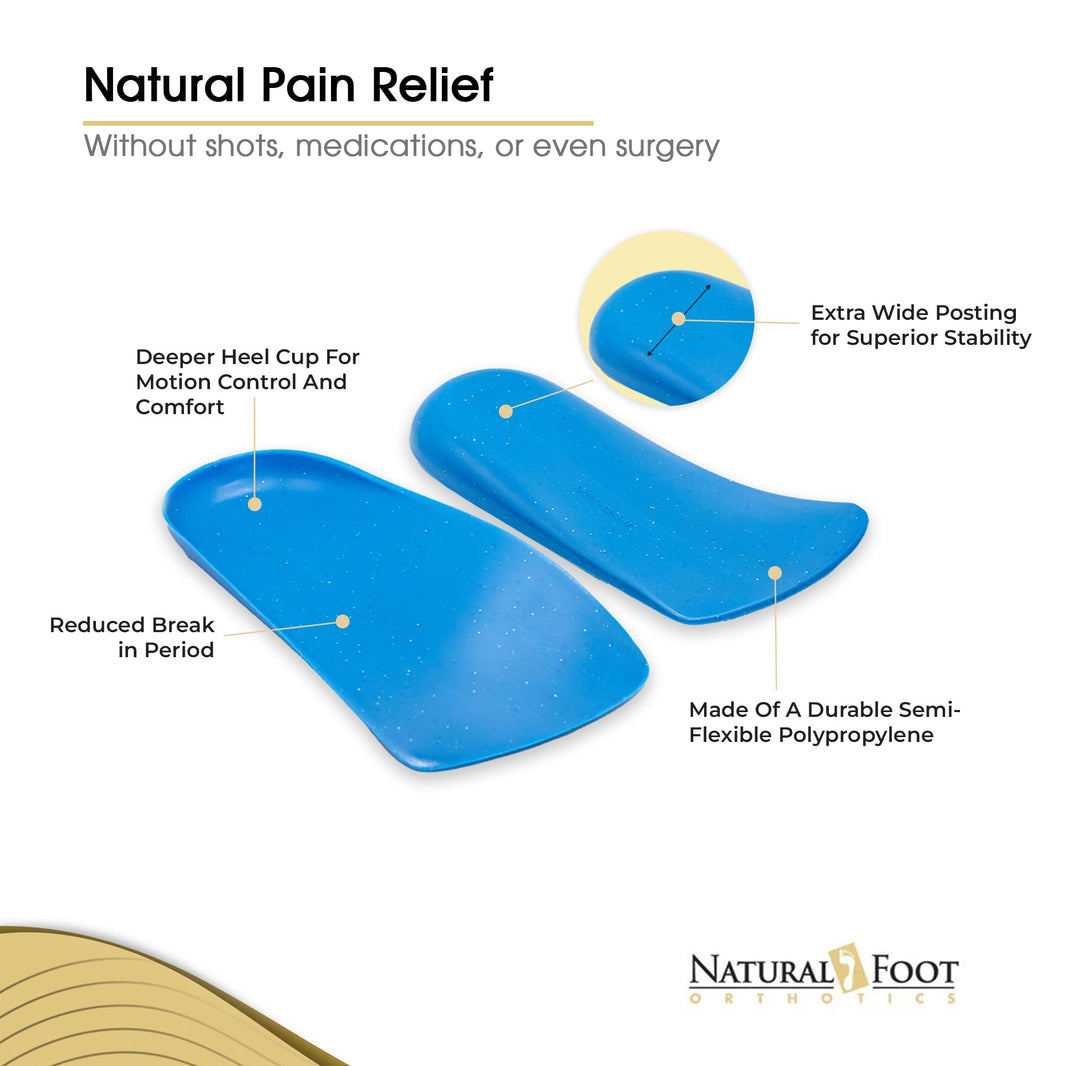
Cloud RX- Our Cloud RX Firm is a firmer semi-rigged orthotic designed for the medium high arch that has a deeper heel cup and wider stable design than the Cloud Comfort orthotic.
Are Natural Foot Orthotics inserts full-length or ¾ length?
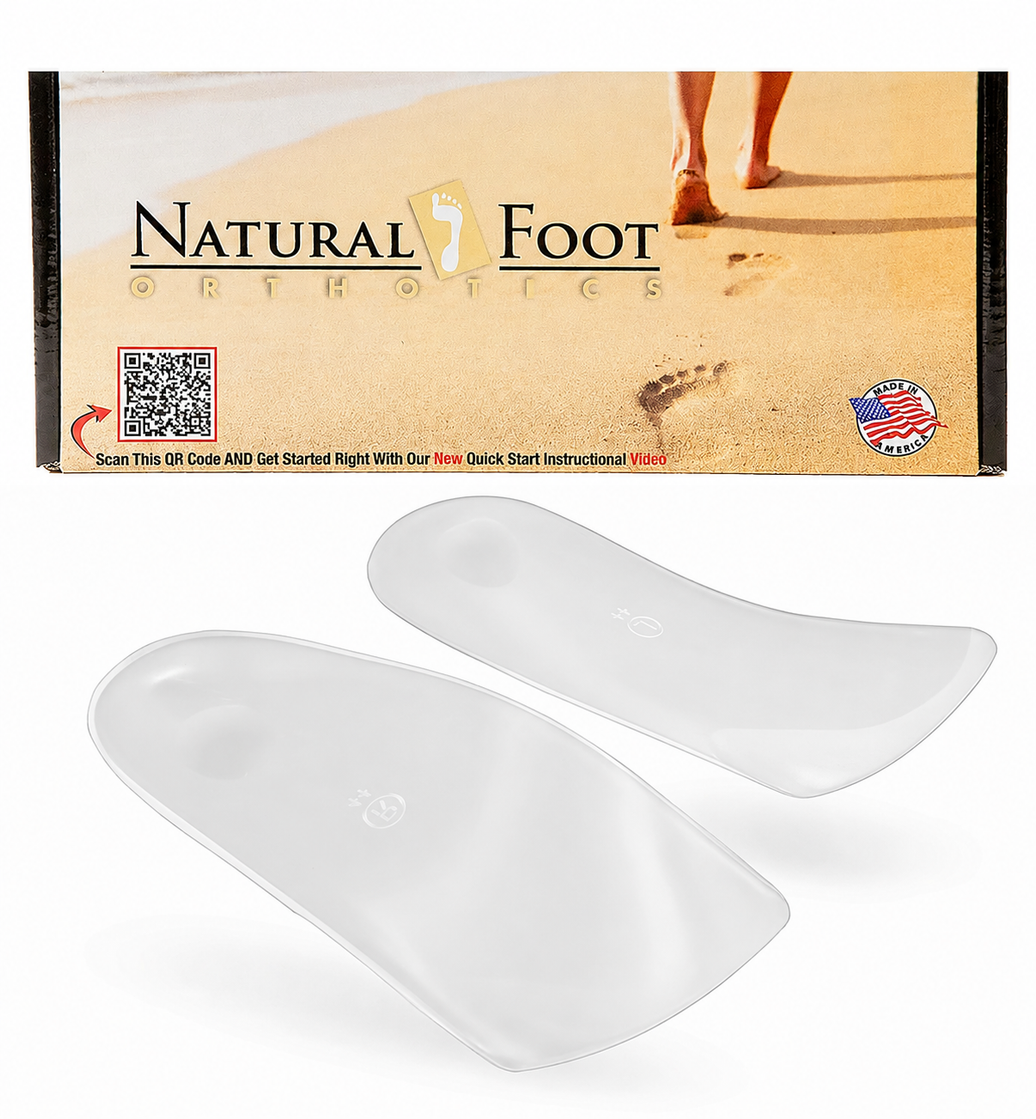
All Natural foot orthotics are ¾ length, Making them much more versatile.
Are the stabilizer orthotics trimmable?
No, none of the orthotics are trimmable. Only Cushions are trimmable.
Do you offer orthotics specifically for heels and dress shoes?
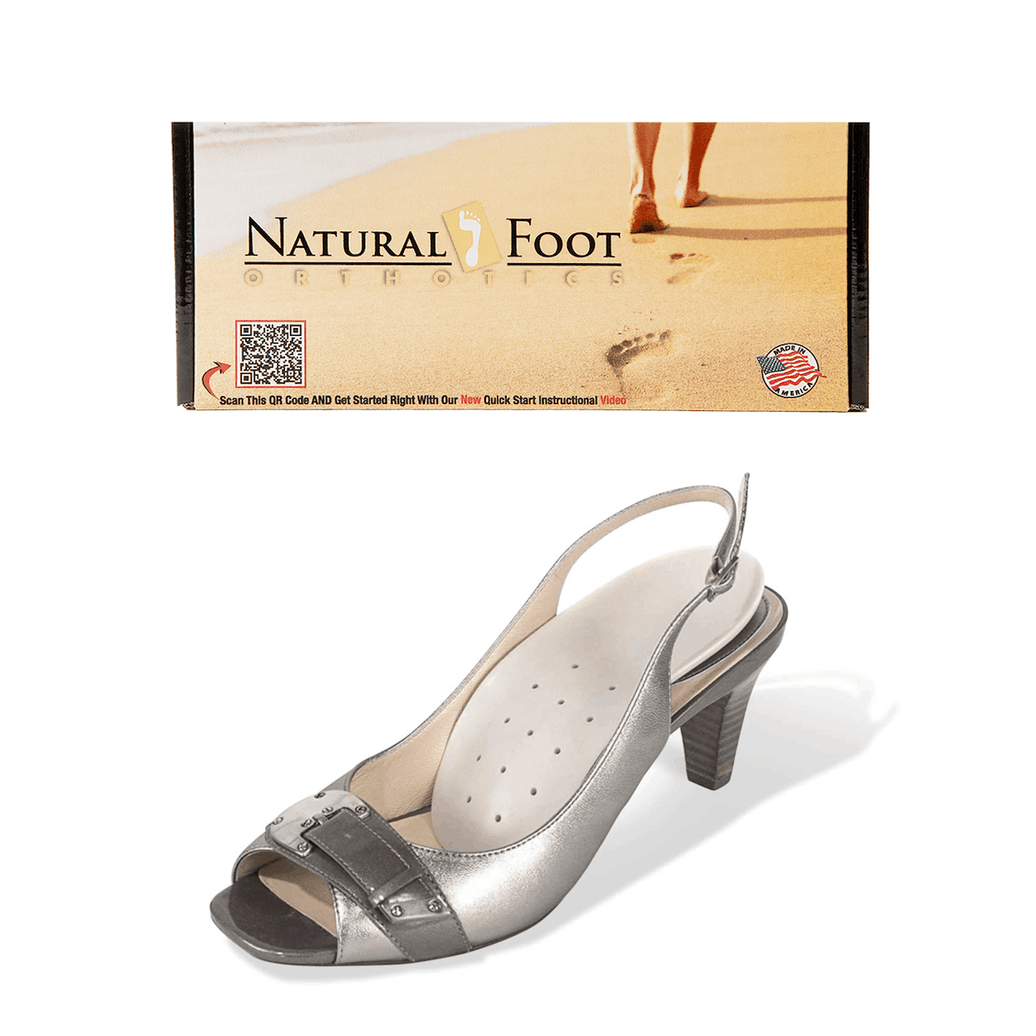
Fashions orthotic is a perfect choice if you primarily wear heels or 4 dress shoes.
Can I rotate different models for different activities or shoe types?
You can rotate different models by shoe type and daily activity.
What are Orthotic Cushions and what are they made of?
Cushions are the perfect add-ons to any stabilizers. Put the mover the stabilizers and additional comfort during the break-in period.Made of 100% sponge rubber with a nylon covering.
Are Natural Foot Orthotics products made in the USA?
Yes, they are made in the USA.In southern California, Family owned and operated since 1997.
What are the orthotics made of?
EVA- polypropylene BP free.
How are your products different from drugstore/online inserts or custom orthotics?
NFO orthotics are made of quality materials using injection molding,Assuring that the orthotic holds its shape and rigidity.Unlike other insoles that have to be replaced every 3-6 months ours should last years. Recommended by doctors Nationwide.
How much do Natural Foot Orthotics cost?
Prices vary from $39.99 to $99.99 NFO orthotics is a manufacture in the USA.Buy direct from the manufacture and save by cutting out the middle man. Similar retailers sell for as much $450
Fit, Sizing & Shoe Compatibility
How do I know if my orthotics are the right size?
You should confirm that your heel sits into the heel cup and the front edge ends before the ball of your foot, using the brand’s fitting guidance. Take Quiz
Where should I feel the support when standing?
You should feel support in the centered of your arch. The leading edge of the orthotic should fall just short of the ball of the foot. Take Quiz
Should I remove my shoe’s factory insoles?
Some factory insoles already have some support that will interfere with orthotics. Yes, if posable and replace with Natural Foot Cushion Designed just for orthotics.
What if my shoes do not have removable insoles?
You can usually place a ¾-length support insert on top of a non-removable footbed if you cannot remove the factory insole, as long as the shoe still fits comfortably.
What shoes work best with Natural Foot Orthotics?
You should prioritize quality shoes with enough interior volume and a stable heel counter so the insert sits flat and your foot is not overly cramped.
Can I wear the product in sandals/flip-flops or different shoe types?
Yes, heavy duty Velco can be used to keep the orthotic in place.
Can I wear orthotics in work boots or safety shoes?
You can often wear orthotics in work boots if the boot has adequate depth and stability, but you should ensure the fit is not tight and the insert lies flat without rocking
How do I know what kind of arch I have?
You can take a brown paper grocery bag, us Vaseline or Lotion, rub on the bottom of your feet and stand on the bag this will leave a print of your arch Then compare to the Arch Type image to know if you area Low, Medium or High arch. Take the quiz
Comfort, Break-In & Usage
Why do orthotics sometimes feel uncomfortable at first?
You can feel discomfort initially because your feet and lower body are adapting to new support and alignment, so you should use a gradual break-in schedule rather than wearing them all day immediately.
What is the recommended break-in schedule?
You should start with limited wear time and increase gradually day by day, or a conservative clinical break-in approach if you’re sensitive.
How long is the break-in period for the most aggressive model?
It can vary typically no more than 1 hour the first day, add an hour everyday until they can be worn comfortably all day. People with very high aches adapt quicker
Will the product feel uncomfortable at first?
You should expect some adjustment sensations early on, and you should reduce wear time and seek guidance if you develop sharp pain rather than mild adaptation of discomfort.
How do I break in new orthotics without making my pain worse?
You should increase wear time slowly, stop if symptoms spike sharply, and combine inserts with supportive footwear and stretching rather than forcing long wear on day one.
Can I wear only one insert if only one foot hurts?
No. You should avoid “guessing” here because wearing one insert can change your gait and loading, so you should confirm with a clinician if you’re considering one-sided wear.
How do I clean and care for them?
Warm soapy water and dry naturally
How often should I replace them?
Our orthotics last for years due to our exceptional materials and manufacturing. We offer a limited lifetime warranty on our stabilizer collection for cracking and breaking.
Ordering, Shipping & Support
Do you ship internationally?
No.
What are your processing times and shipping options?
Orders are usually processed with in 3 or 5days through USPS or Amazon direct.
How do I track my order?
You should get a tracking number if not please contact our Custom Service, support@naturalfootorthotics.com or call 888-511-4449
What is your exchange policy?
Within the original 30 days we will exchange for resizing or for a milder or stronger pair of orthotics at no charge.
What is your return/refund policy?
No returns/refunds after 30 days from delivery date. Returns received after the delivery date will not be refunded. The customer is responsible for return shipping costs.
What does the lifetime warranty cover and how do I activate it?
Natural Foot Orthotics guarantees its arch supports to be free from defects in materials or manufacturing. All Stabilizer orthotics carry a lifetime warranty against breaking or cracking. This does not include normal wear and tear. Return the product with your receipt and a check for $20 for shipping and handling. Activate here.
Do you accept FSA/HSA payments?
You can use eligible FSA/HSA payment options as described by the brand, and you should save receipts in case your plan requires documentation for reimbursement.
Do you offer free fittings or personalized fittings?
No. We offer educational videos as well as a fitting quiz for your convenience. Take Quiz
Does insurance cover arch supports/orthotics?
You should verify coverage directly with your insurer because benefits vary widely.However, we are FSA/HSA Eligible.
Medical Education
Do you diagnose, prescribe, or provide medical advice?
You should treat the site’s content as educational and product guidance, not a medical diagnosis, and you should consult a clinician for serious or persistent problems.
What conditions does the site claim the orthotics can help with?
Orthotics help with plantar fasciitis and other foot, hip, and back pain. Read our testimonials!
Are the orthotics described as clinician-endorsed?
We have been endorsed by Dr. Rehm, as well as mentioned by Mayo Clinic and the Orthopedic Doctors Association
What is plantar fasciitis, and why does my heel hurt most in the morning?
You can think of plantar fasciitis as irritation of the plantar fascia, and you often notice sharper heel pain with first steps after rest because the fascia tightens when you’re off your feet.
What are the most common causes of heel pain?
You should know heel pain can come from several causes (including plantar fasciitis and other tendon or structural issues), so you should get evaluated if it’s severe, persistent, or linked to injury.
How do I know if I need orthotics or just cushioned insoles?
Everyone needs orthotics. Modern shoe design does not have all the support needed for proper alignment.You can use cushioning for comfort, but you should consider orthotics when you need structured support for alignment or symptom management, especially if pain keeps returning despite shoe changes.
Do shoe inserts help plantar fasciitis?
You can use inserts/orthotics to help reduce strain for proper alignment and footcare, but you should pair them with stretching and supportive shoes and see a clinician if symptoms don’t improve.
What stretches help plantar fasciitis the most?
You should focus on plantar fascia–specific stretches plus calf/Achilles stretching because both are commonly recommended for plantar heel pain management.
Do night splints work for plantar fasciitis?
You can consider night splints because they keep the plantar fascia and Achilles in a lengthened position overnight, which may reduce morning pain for some people.
When should I see a doctor for foot pain?
You should see a clinician if pain is severe, worsening, follows an injury, or does not improve after a reasonable period of self-care.
How long does plantar fasciitis take to heal?
You should expect recovery timelines to vary from weeks to months, and you should seek evaluation if symptoms persist because prolonged pain may need a more structured plan.
What’s the difference between flat feet, overpronation, and plantar fasciitis?
You can think of flat feet and overpronation as foot structure/movement patterns, while plantar fasciitis is a pain condition involving the plantar fascia that can be influenced by mechanics but is not identical to them.
Are ¾-length orthotics better than full-length insoles?
¾ length often fits more shoes and focuses on arch/heel support.¾ length orthotics are much more versatile, last longer.
Can orthotics cause knee, hip, or back changes?
You can experience changes up the chain because altering foot support can change your gait and loading patterns, so you should break in gradually.
What are the best inserts for standing all day?
You should look for a balance of supportive structure and cushioning that matches your foot shape and work shoes. We recommend starting with the Stabilizer Collection.
How do I know if my shoes are making my foot pain worse?
You should suspect shoes are contributing if they’re worn out, unsupportive, or too tight, and if pain improves when you switch to more supportive footwear and a structured insert.
Do inserts help heel spurs?
You can use supportive inserts/orthotics as part of conservative management for plantar heel pain associated with bone spurs, alongside stretching and footwear changes.
“Best orthotics” for plantar fasciitis?
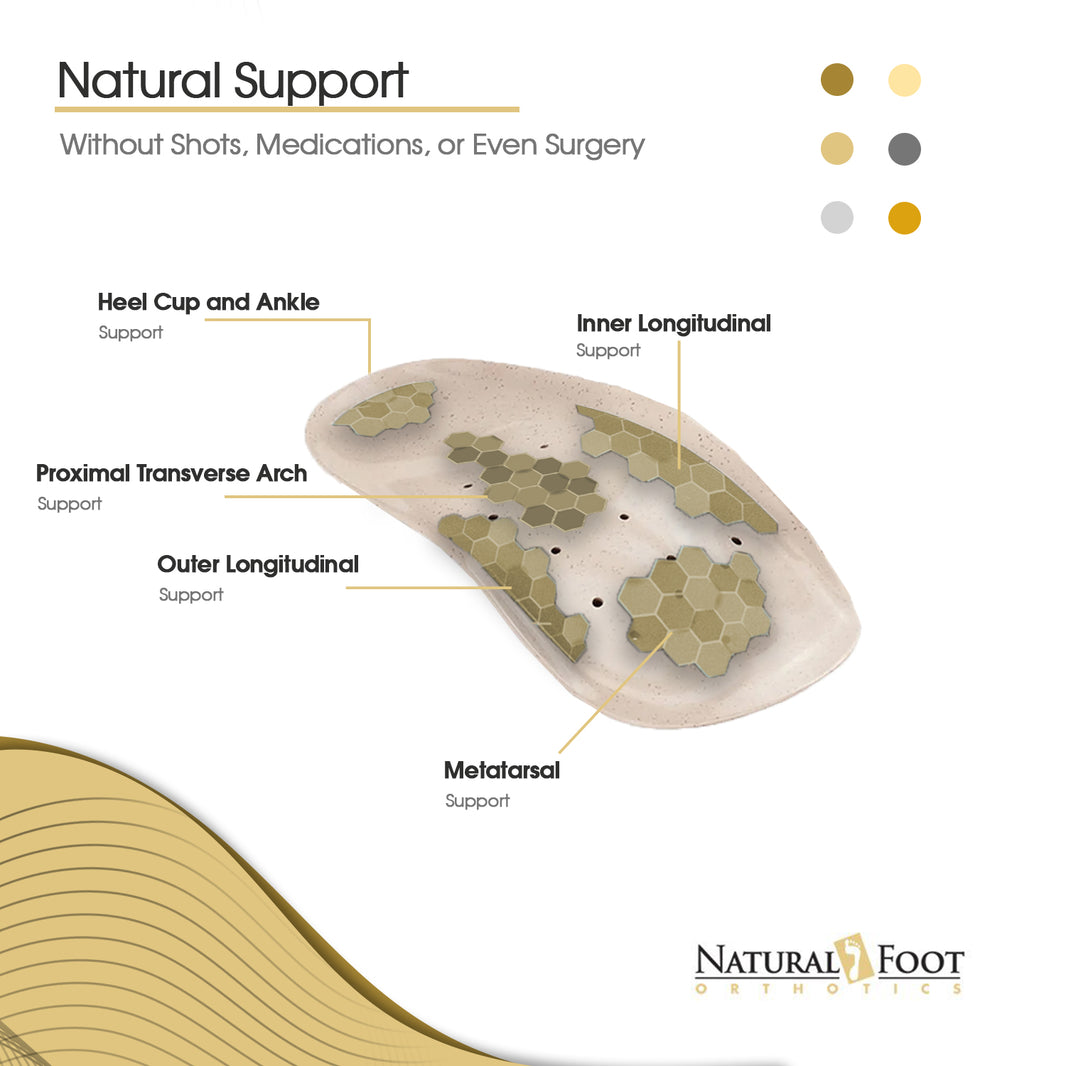
The “Stabilizer” line has proven to be one of the best orthotics for plantar fasciitis. Our design supports all 4 arches, reshapes the foot taking pressure off the plantar fascia redistributing your body weight evenly across the bottom of the foot. In many cases customers report almost instantaneous pain relief.