

Foot Measurement & Arches

Learn how to measure your foot & about arches.

Measure your true-foot size from home.

This simple 4-step trick can save you time and money when ordering shoes, orthotics, or cushions

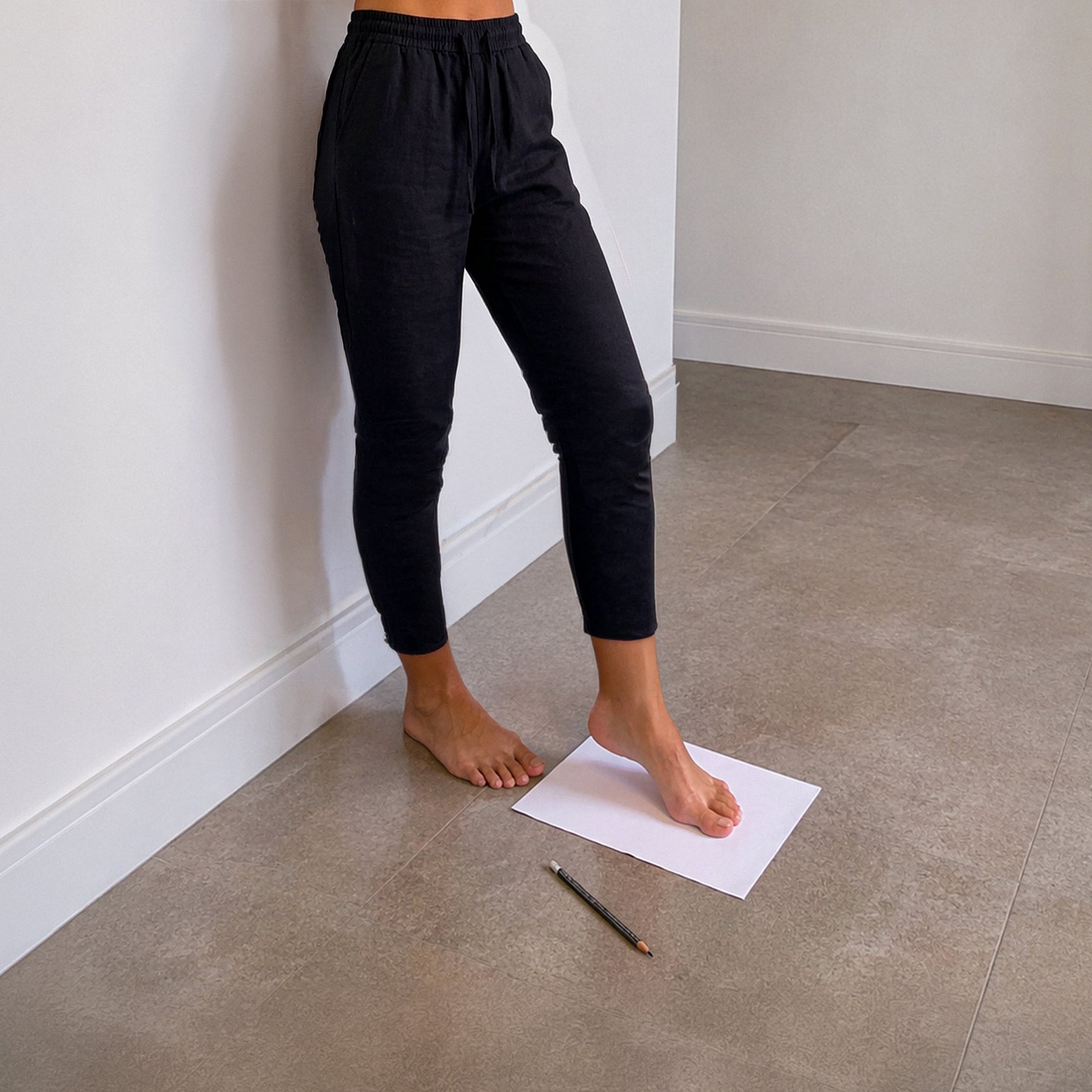
1. Place a sheet of white paper flat on the floor with one edge touching the wall. This gives your heel a consistent starting point. Make sure si larger than your foot.

2. Stand barefoot with your heel lightly touching the wall and your full weight on the foot. Lean naturally forward as if standing normally so your foot spreads to its true size.

3. Use a pencil or pen to mark the tip of your longest toe. Then mark the widest points of your foot on both sides if you want width too.

4. Measure from the wall edge to the toe mark. Repeat on the other foot and use the larger measurement when choosing shoe size. Always compare it to the brand’s size chart for best accuracy.
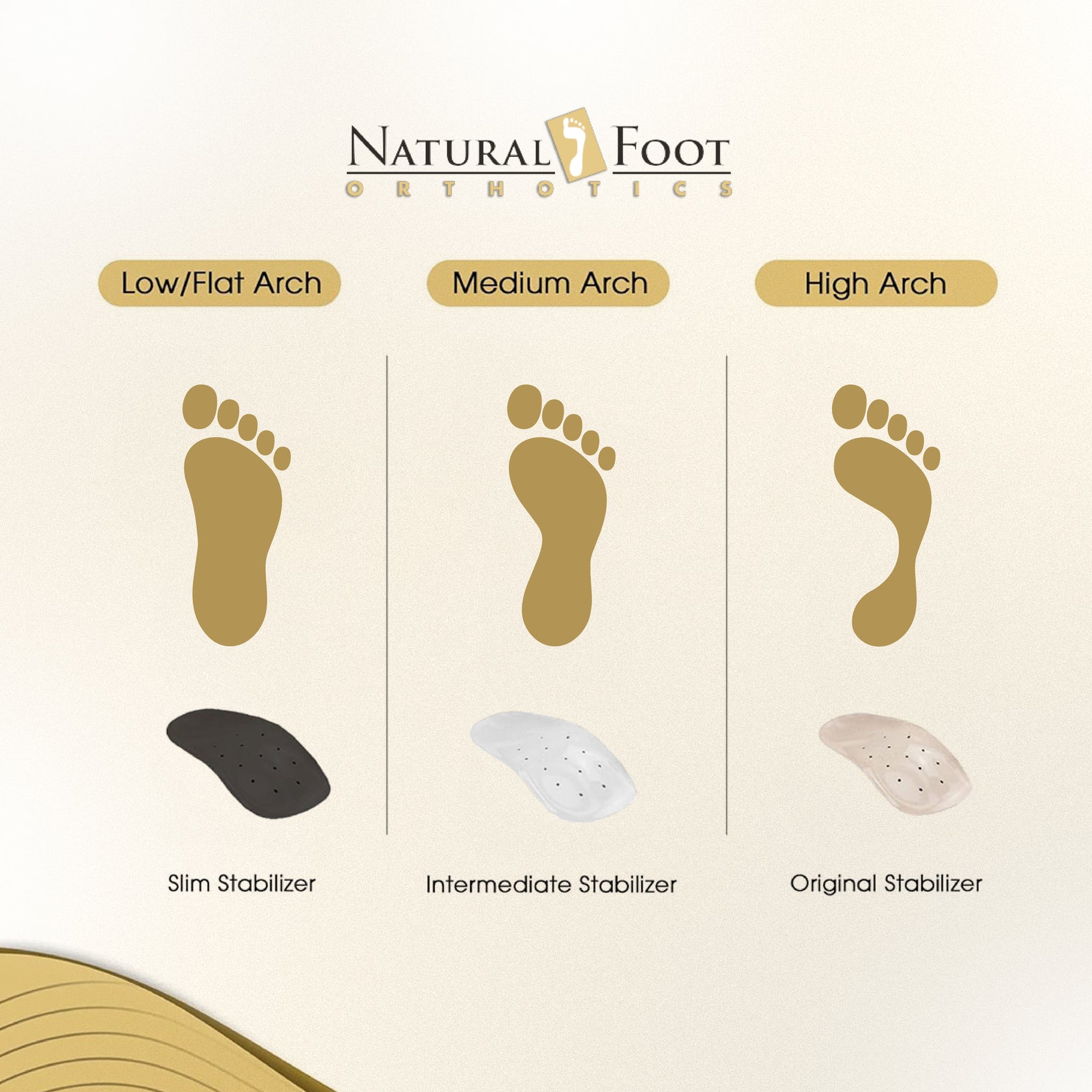

Arch Type Trick

Find your arch type with only a brown paper bag.

1. Dip your bare foot in a small amount of water or wet the sole just enough so it leaves a clear print, but not so much that it drips.

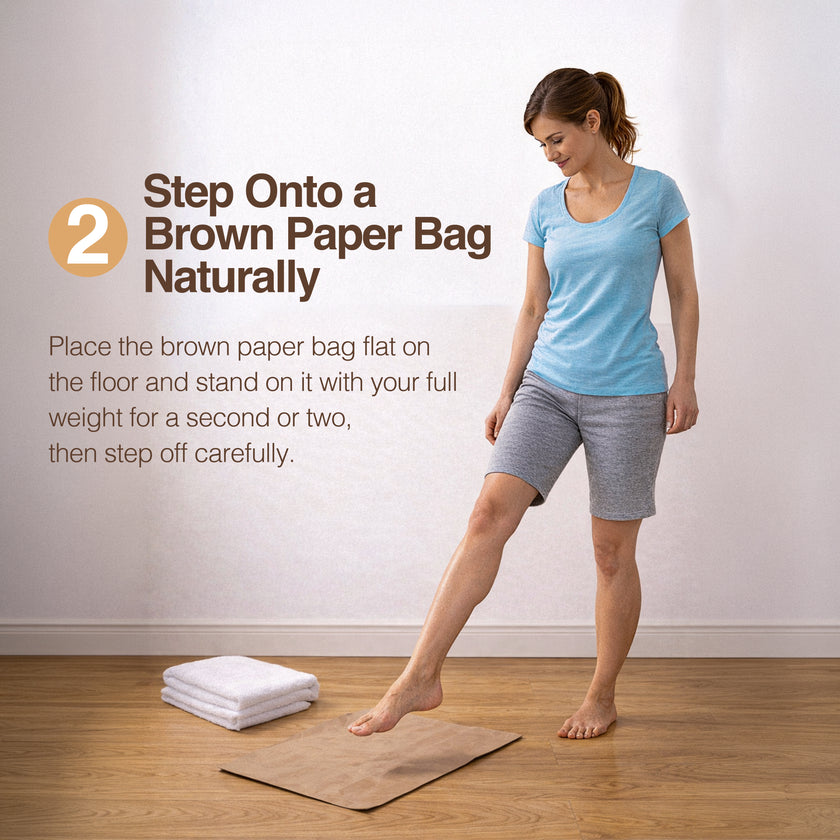
2. Place the brown paper bag flat on the floor and stand on it with your full weight for a second or two, then step off carefully.

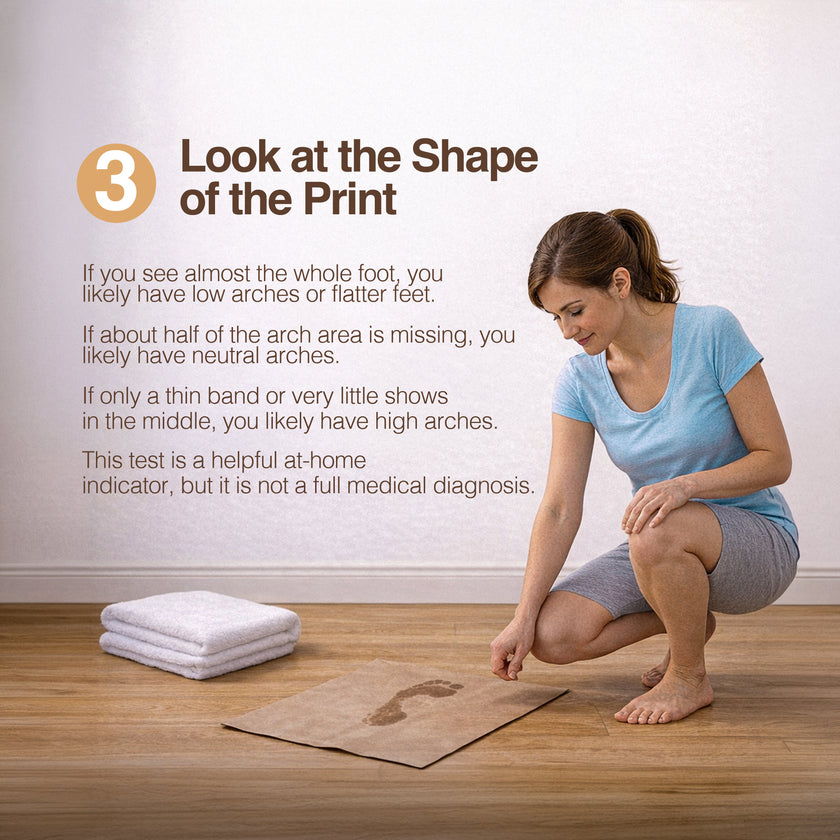
3. If you see almost the whole foot, you likely have low arches or flatter feet. If about half of the arch area is missing, you likely have neutral arches. If only a thin band or very little shows in the middle, you likely have high arches. This test is a helpful at-home indicator, but it is not a full medical diagnosis.

Curious About the 4 Arches?

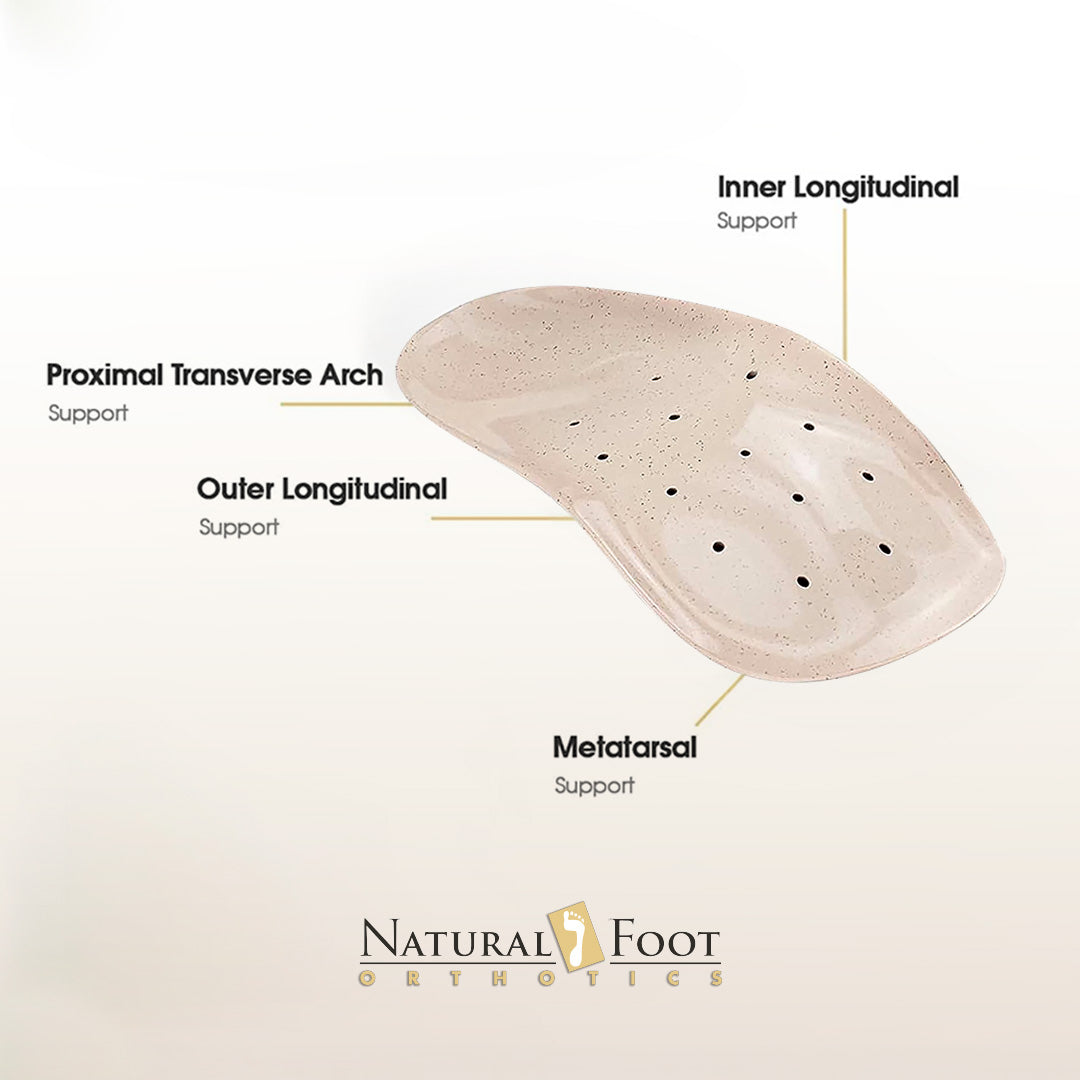
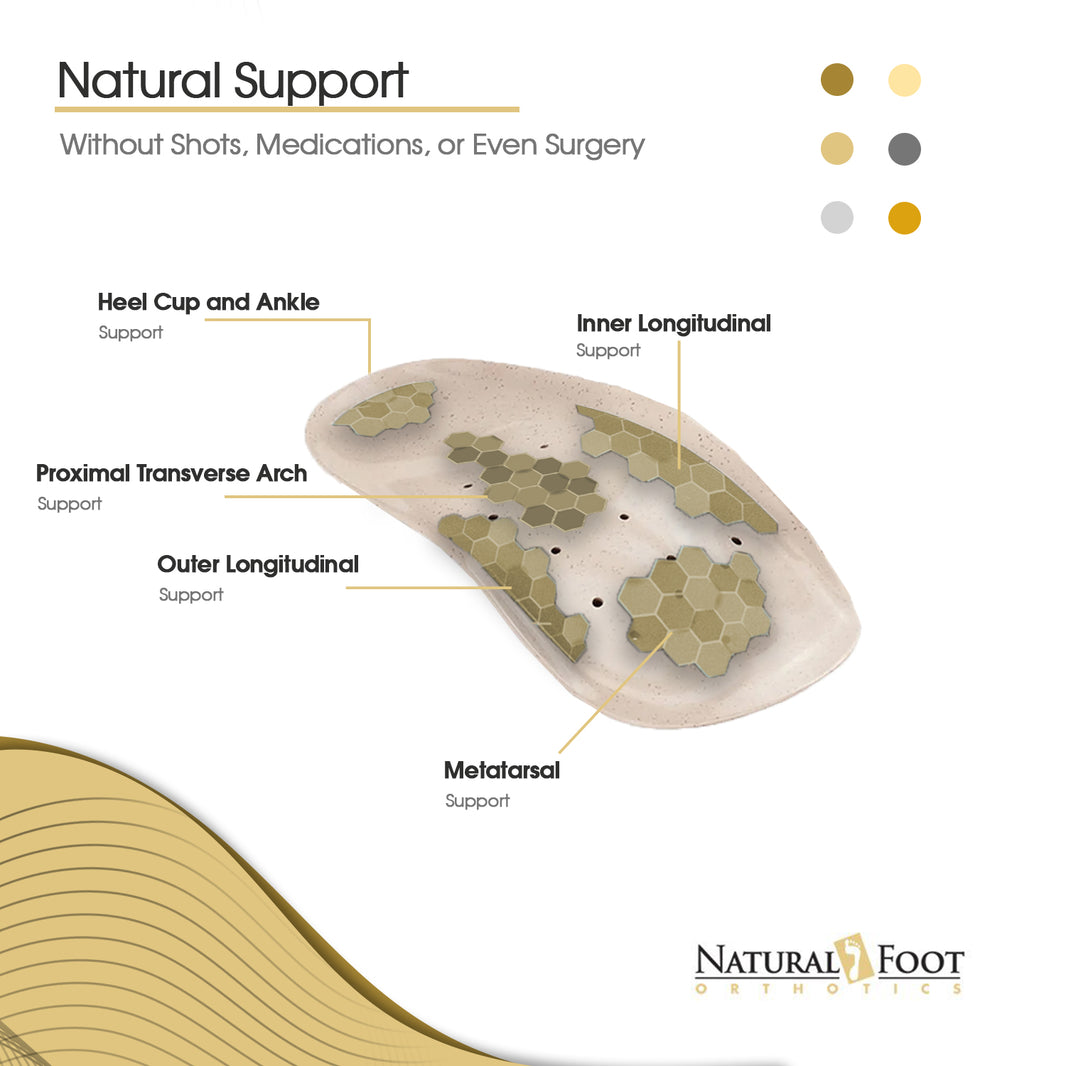
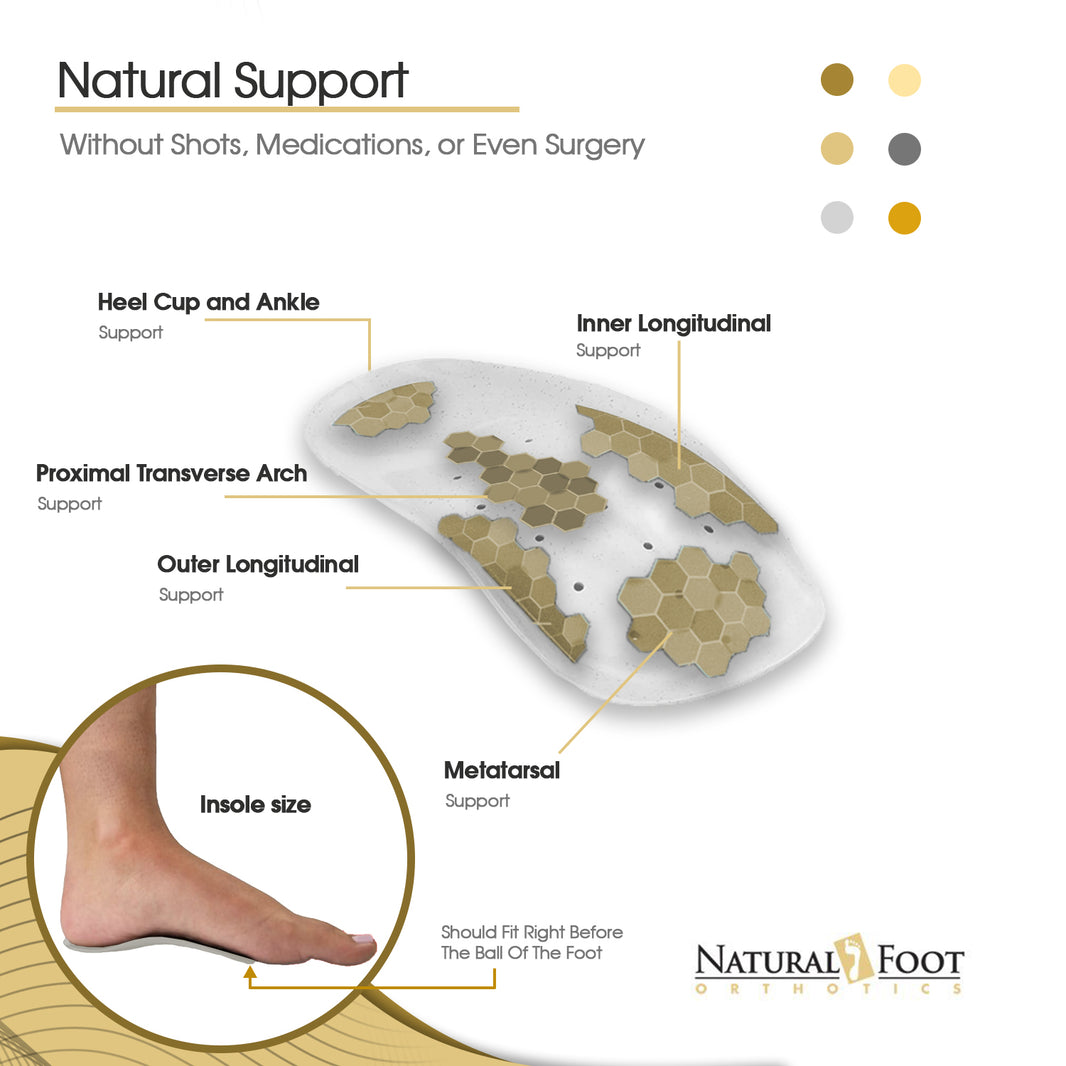
Here's a breakdown on the 4 arches Natural Foot Orthotic's target.

Metatarsal Arch - Located across the ball of the foot, just behind the toes. This arch helps distribute pressure during walking and standing, supports balance, and can reduce strain on the front of the foot.

Inner Longitudinal Arch - The main arch along the inside of the foot, running from the heel to the ball of the foot. It acts as a natural shock absorber and helps with stability, alignment, and efficient movement.

Outer Longitudinal Arch - Found along the outside edge of the foot from heel to forefoot. This arch provides structure, balance, and a stable base during standing and walking.

Proximal Transversal Arch - Located across the midfoot area, spanning side to side between the inner and outer parts of the foot. It helps maintain foot shape, supports even weight distribution, and contributes to overall balance and adaptability while moving.