


Short answer: a quality orthotic should hold its shape for years, not months. Soft foam and gel inserts lose their support within a season of regular wear. Semi-rigid polypropylene devices keep working long after softer materials have flattened — which separates an investment in your health from a disposable product.
Why Does Orthotic Durability Matter?
Your orthotics take a beating. Fatigue testing on foot orthoses simulates well over a million steps — the equivalent of several months of ordinary walking — before evaluating whether the internal structure has begun to break down.
-
When material is compresses, the device stops doing its job. The result:
-
Reduced arch support
-
Less stability underfoot
-
Increased foot fatigue
-
More stress traveling up to the knees, hips, and back
The problem is that this happens invisibly. Supportive materials compress and degrade gradually, and a device can look intact while its internal structure has deteriorated past the point of useful support.
Why Do Foam and Gel Inserts Wear Out So Fast?
It's structural. The tiny air cells inside EVA foam lose air under repeated load and compress permanently, which is why foam cushioning loses its supportive qualities after months of use. Softer EVA devices also tend to collapse under the arch over time, reducing their ability to control pronation or hold up an arch.
What Makes Natural Foot Orthotics Durable?
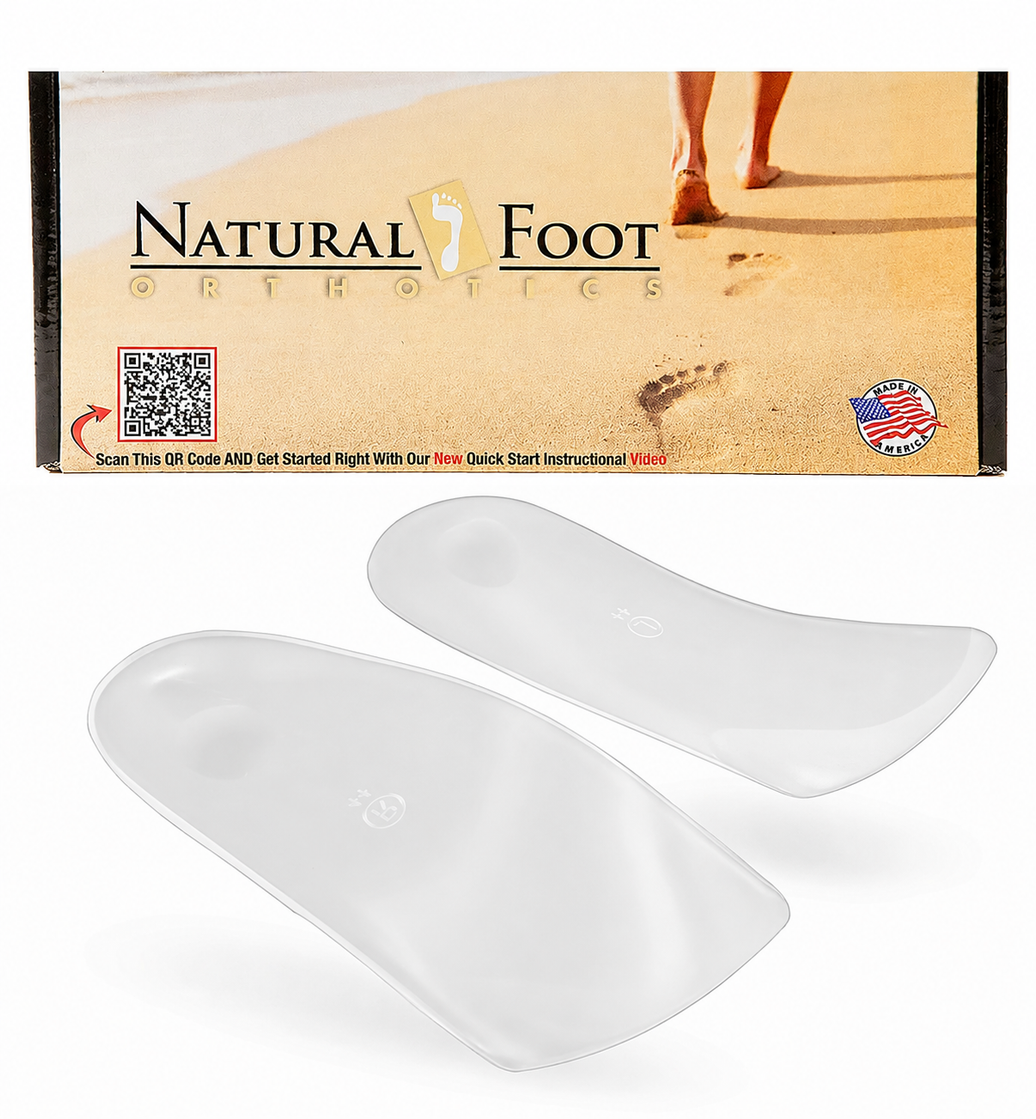
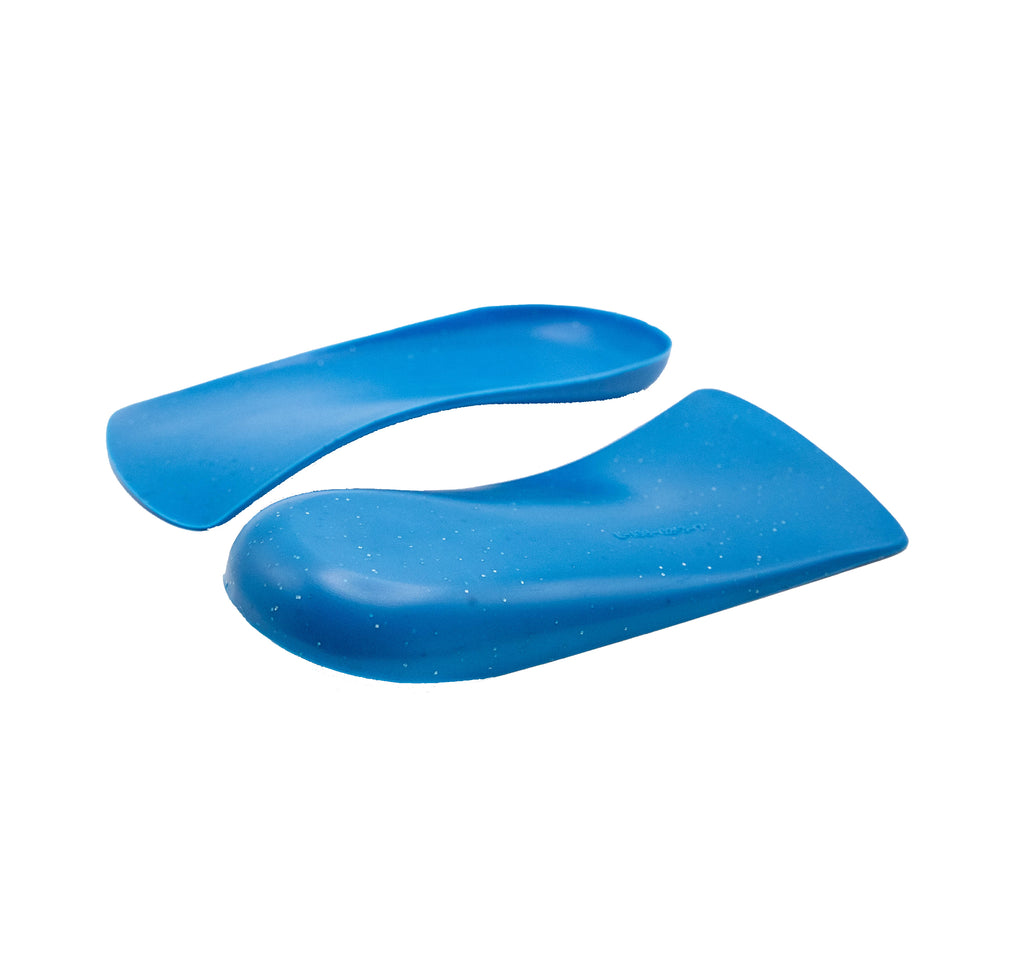
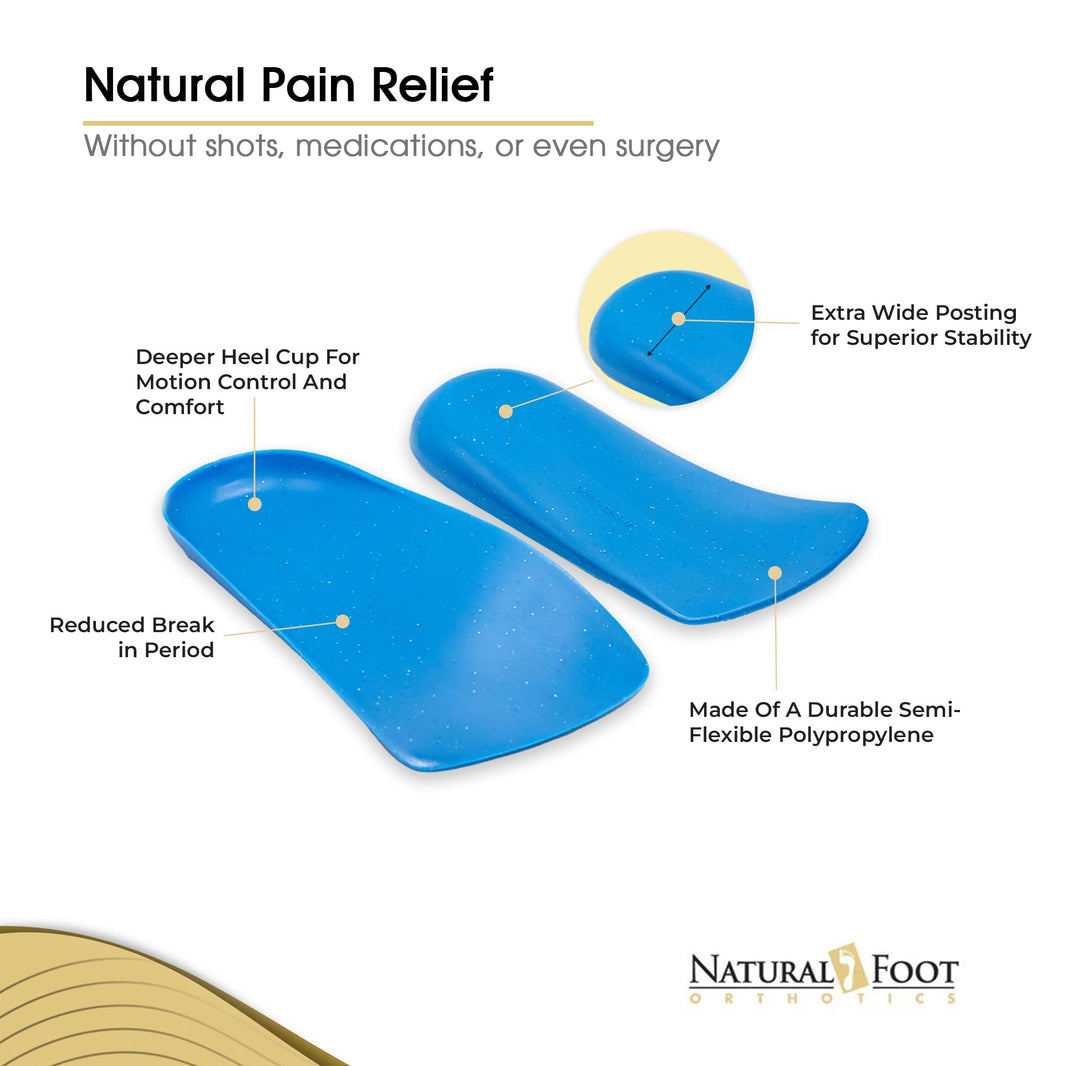
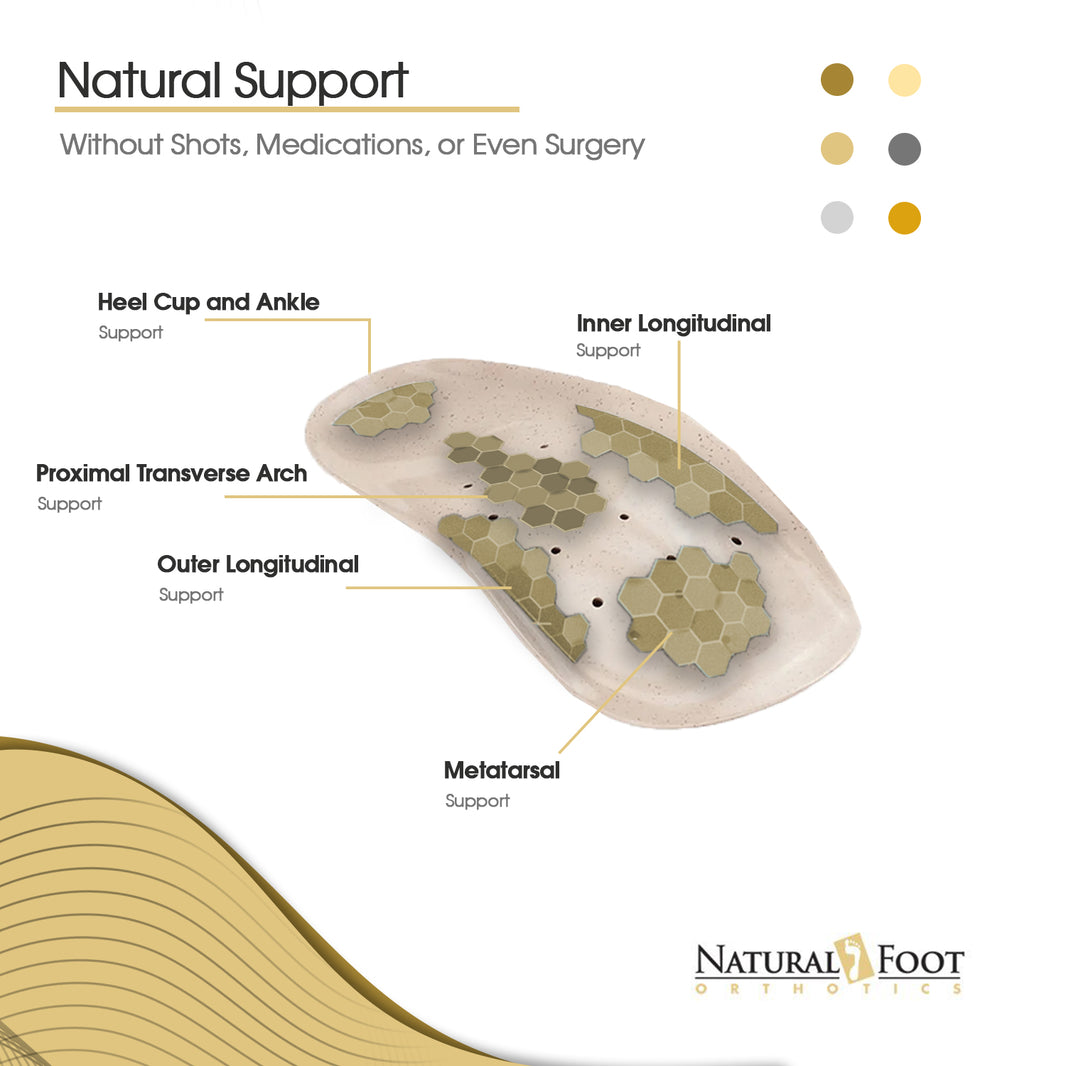
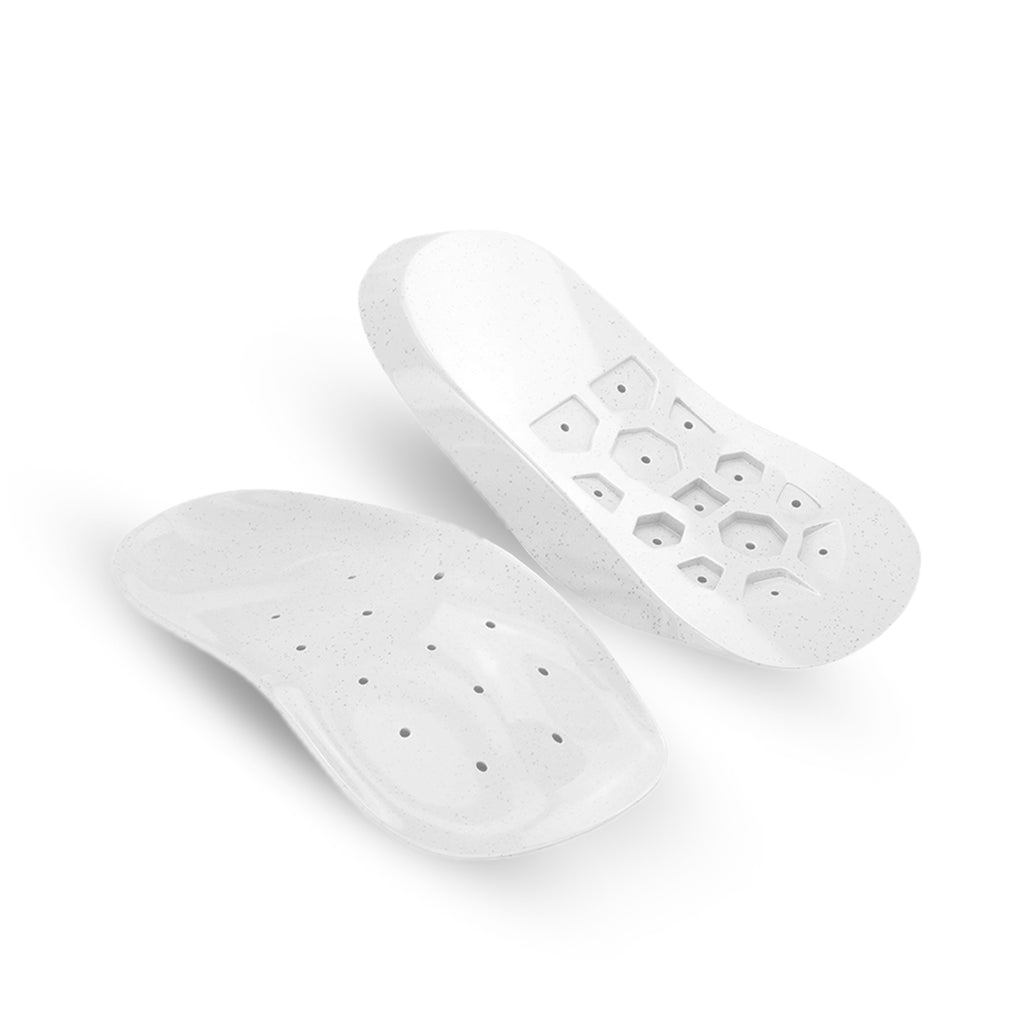
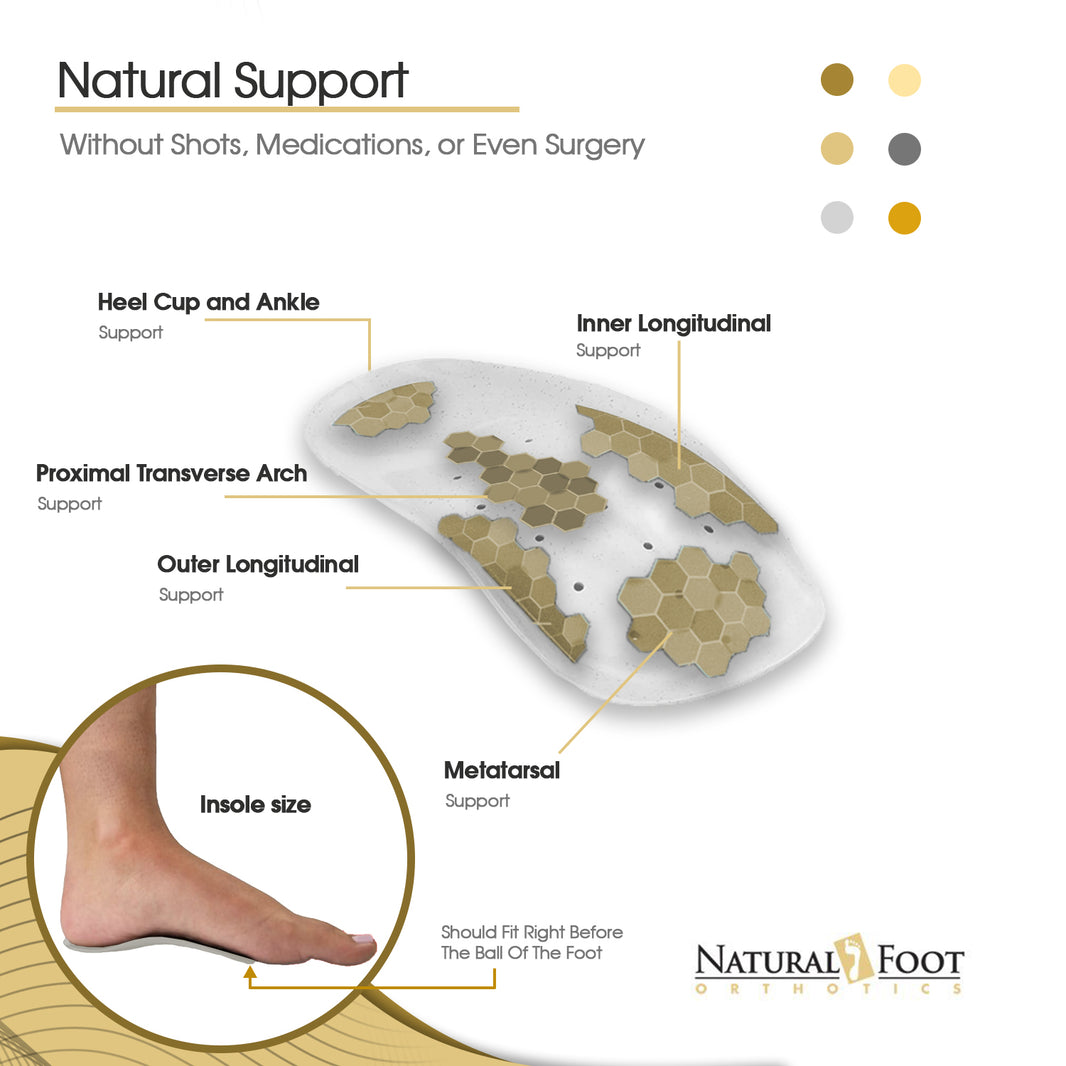
Natural Foot Orthotics stabilizers are manufactured in the USA from semi-rigid polypropylene, designed to maintain structural integrity through years of normal use rather than compressing under it. Every pair carries a lifetime warranty covering breakage and cracking.
How Do You Make Orthotics Last Longer?
-
Wipe clean with mild soap and water
-
Allow them to air dry completely — trapped moisture degrades materials faster
-
Keep them out of extreme heat, which can warp thermoplastic permanently
-
Rotate between pairs of shoes; varied pressure patterns spread the wear
-
Inspect periodically for cracks, flattening, or uneven wear
When Should You Replace Your Orthotics?
Even durable devices don't last forever. Research on prefabricated orthoses worn for at least a year found small but measurable losses in pressure redistribution compared with new pairs. Typical guidance is to reassess every two to five years, and sooner if you notice:
-
The return of foot, heel, or arch pain you'd previously resolved
-
Visible cracking, flattening, or an arch that no longer holds its contour
-
New discomfort in your knees, hips, or lower back
-
Heavier wear from high body weight, long standing hours, or daily athletic use
In Conclusion
An orthotic only supports you as long as it holds its shape. Durable, semi-rigid construction means consistent support through long workdays, athletic training, and everyday life — season after season, not just for the first few months.
---------------------------------------------------
Sources
Ideastep. What Is EVA Midsole? — on air-cell compression and loss of cushioning in EVA over months of use.
Forward Motion Medical. Orthotic Shell Materials. — on EVA collapse over time versus thermoplastic shells. fdmotion.com
KevinRoot Medical. Materials: Polypropylene. — on polypropylene's strength, rebound, shape retention, and typical service life. kevinrootmedical.com
Nester CJ, et al. Evaluation of the pressure-redistributing properties of prefabricated foot orthoses in older people after at least 12 months of wear. Gait & Posture. 2011. PubMed
Assessment of the Flexural Fatigue Performance of 3D-Printed Foot Orthoses Made from Different Thermoplastic Polyurethanes. Applied Sciences. 2023. DOI
Verdejo R, Mills NJ. Heel–shoe interactions and the durability of EVA foam running-shoe midsoles. Journal of Biomechanics. 2004;37:1379–1386.
American Podiatric Medical Association. Orthotics. — on seeking podiatric guidance for new or worsening pain with arch supports. apma.org
Leave a comment